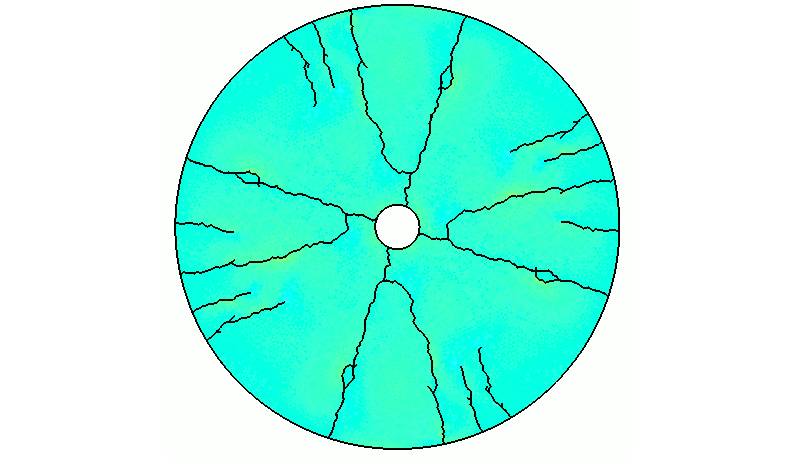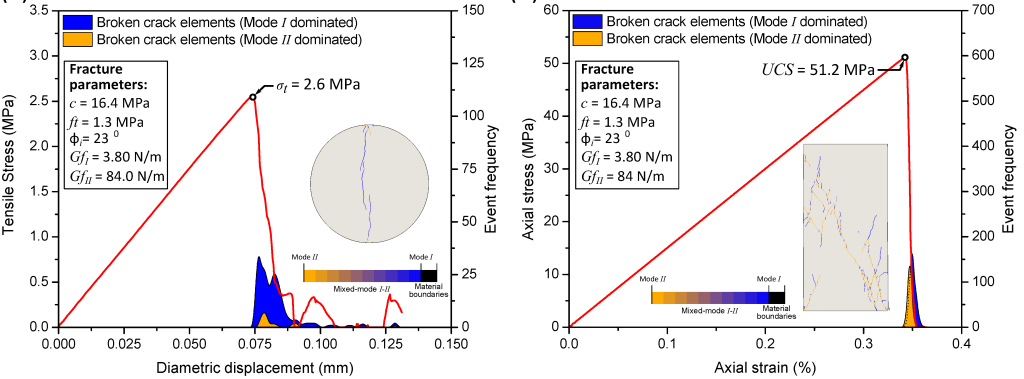
The computational engine of Irazu simulation software is based on the finite-discrete element method. This inherently means that Irazu is equipped with a finite element solver (FEM). The FEM solver uses linear elastic constitutive laws (isotropic and transversely isotropic) and solves the equations of motion using an explicit time integration scheme. Therefore, it is well … Read more
FDEM
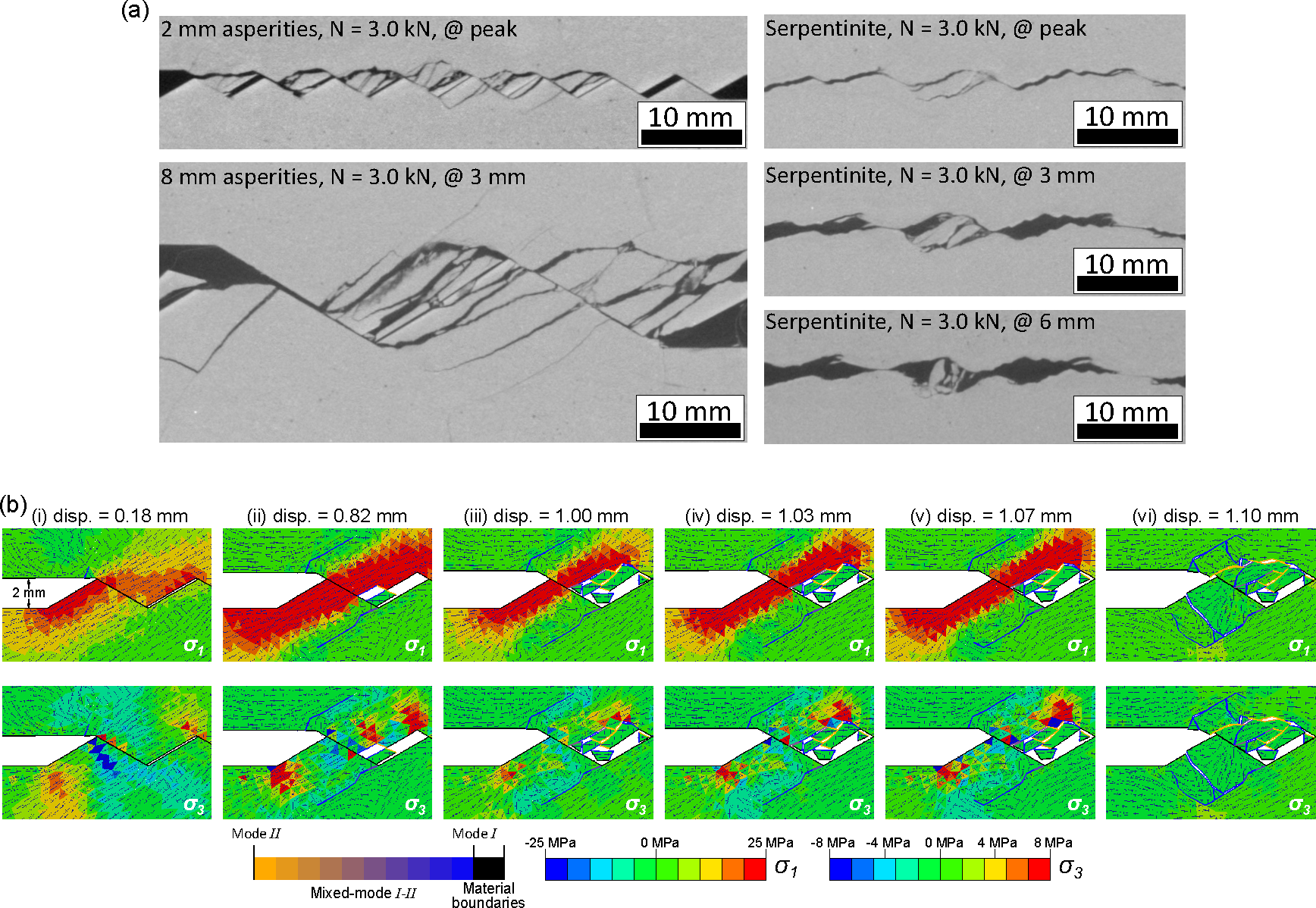
The multi-facetted experimental and numerical investigation forming the PhD thesis of Geomechanica’s Dr. Bryan Tatone entitled “Investigating the evolution of rock discontinuity asperity degradation and void space morphology under direct shear ” demonstrated the first experimentally-supported simulation of discontinuity shearing using a FDEM modelling approach. Dr. Tatone’s work coupled micro-Computed Tomography (micro-CT) with FDEM modelling … Read more
Geomechanica is launching a guest blog series, written by experts and numerical modellers in the field of rock engineering. In the first post of this series, we’re showcasing the work of Andrés Alcolea on “A pragmatic methodology to abstract the EDZ around tunnels of a geological radioactive waste repository – Application to the HG-A experiment … Read more
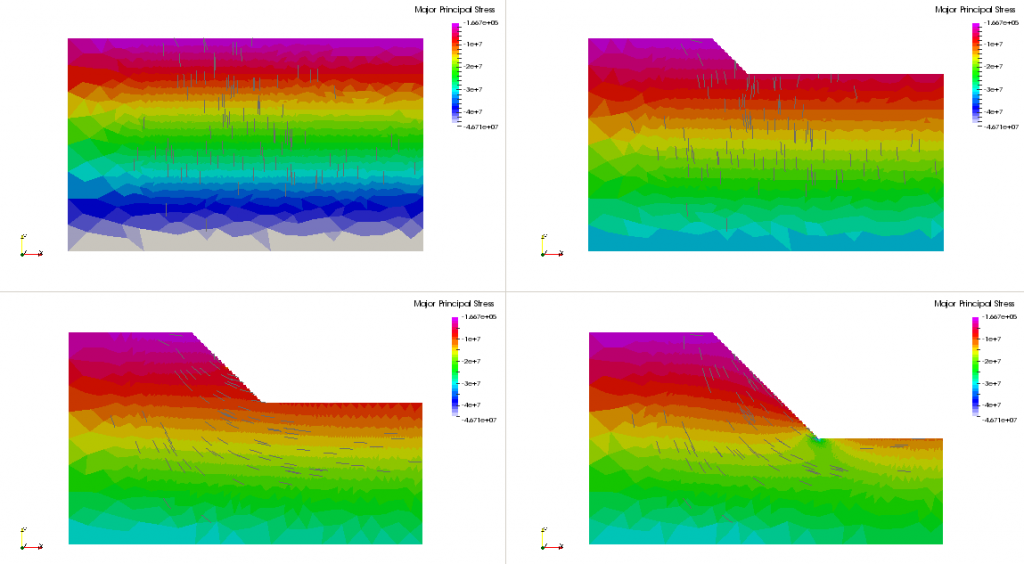
Understanding and predicting the the rock mass mechanical response to temperature variations is relevant for a number of geo-engineering applications, including: underground disposal of nuclear waste, geothermal energy extraction, underground LNG storage, geological sequestration of CO2, and coal bed gas extraction. We are pleased to announce that we have been working on the introduction of … Read more
The ability to capture increasingly complex behaviours within a numerical simulation is typically accompanied by an increase in the number of input parameters that must be specified. Inevitably, with additional physics come additional parameters to govern these physics. Critics of numerical modelling often cite the uncertainty associated with parameter selection as a reason to avoid … Read more